Back pain and spine problems

The problems we are solving

Pain and problems in the spine (lumbar, thoracic, and cervical region)

Back pain is one of the most common health problems affecting people of all ages. The spine is a complex system of vertebrae, joints, muscles, ligaments, and nerves, which is why problems within it can cause a wide range of symptoms. This pain is a leading cause of absence from work and significantly impacts the quality of life.

Frequency and causes of pain

Back pain is very common—almost everyone experiences it at least once in their lifetime. The most common causes of back pain stem from various forms of pathology that affect the stability, mobility, and functionality of the spine.

Most common spinal pathologies

Herniated disc: It occurs when an intervertebral disc, the cushion between the vertebrae, presses on nerve roots. This can cause pain, numbness, and weakness in the arms or legs.
Degenerative changes: Over the years, degeneration of the intervertebral discs and joints can occur, leading to loss of disc height, narrowing of the canals, formation of osteophytes (bone spurs), and a decrease in spinal mobility.
Spinal stenosis: Narrowing of the spinal canal that puts pressure on the spinal cord or nerve roots can cause chronic pain.
Bolečine in težave v hrbtenici (ledveni, prsni in vratni predel)
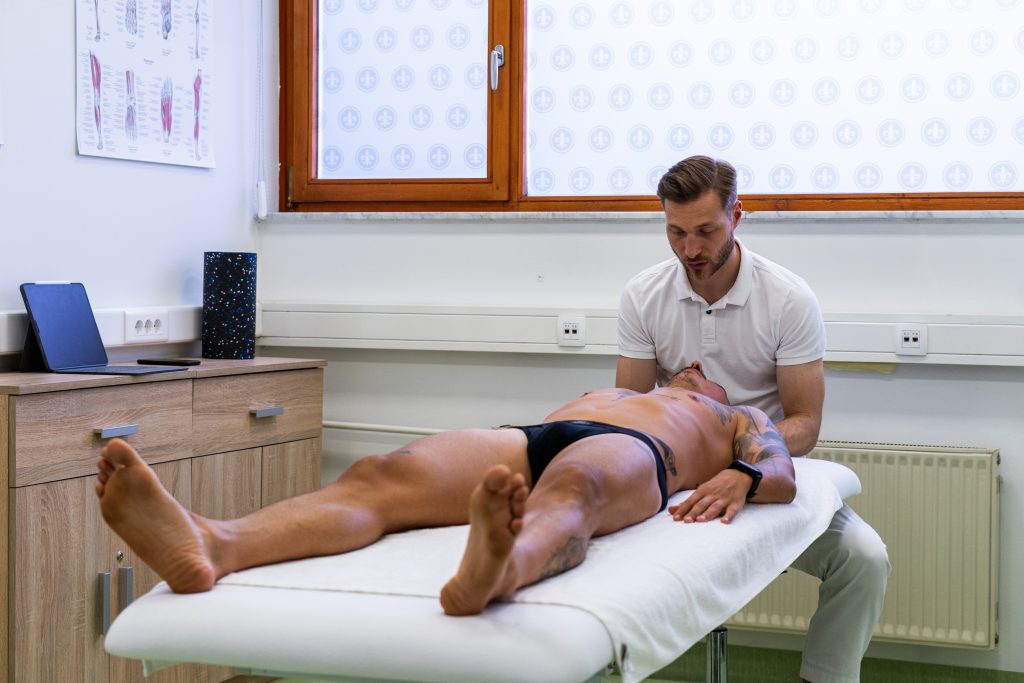
Fizioterapevt izvaja fizioterapijo
Spondylolisthesis: This is the forward displacement of one vertebra over another, which can cause pressure on the nerves and result in pain and movement difficulties.
Musculoskeletal disorders: Muscle tension, overexertion, poor posture, and soft tissue injuries are common causes of back pain, especially with a sedentary lifestyle.
Facet syndrome: This occurs when the joints between the vertebrae become overloaded, causing pain that can radiate to surrounding areas.
Entrapment of nerve structures causing pain and tingling in the upper or lower limb.
Viscerosomatic influx: Back pain is not always related solely to musculoskeletal issues. It can stem from problems with internal organs, such as the digestive tract, kidneys, liver, or lungs. These problems cause a viscerosomatic influx, where nerve impulses travel from the organs to the spine. For example, kidney problems often manifest as pain in the lumbar region, while heart or stomach problems manifest as pain in the thoracic spine.
Bolečine in težave v vratu

Holistic approach to treatment

As an osteopath and physiotherapist treating spinal issues, I use a holistic approach that focuses on treating the cause rather than just relieving symptoms. This means I treat each patient individually, taking into account their specific problems and condition.
Strokovnjak Almedin Muharemović med izvajanjem vaj osteopatije in fizioterapije, od daleč

A holistic approach includes:

1. Reduction of inflammatory processes: This helps reduce pain intensity and speeds up tissue regeneration.

2. Improvement of overall body function: Because the body's systems are interconnected, it is important to improve the function not only of the spine, but also of all supporting structures and internal organs that can affect the spine. In this way, better balance is achieved in the body.

3. Restoration of body functionality: With appropriate exercises, we establish better functioning of the musculoskeletal system, which prevents further injuries and improves the body's readiness for daily or sports activities. Through a tailored approach and a focus on the causes of problems, we achieve long-term results that enable patients to live a quality life free of chronic pain.

discover the power of the HMA method