Functional organ problems

The problems we are solving

Functional organ problems

Holistic approach to treatment and support for the body


Functional organ problems, such as problems with the respiratory system, digestive tract, urogenital tract and neuroendocrine problems (menstrual problems), significantly affect the quality of life. Such problems are not necessarily the result of structural defects, but often stem from improper organ function. Contributing factors include stress, diet and lifestyle. Osteopathy enables a holistic approach to improving organ function, with an emphasis on restoring balance in the body and eliminating the causes of problems.

Respiratory system support

Breathing difficulties, especially difficulty inhaling, are often related to poor mobility of the rib cage, the diaphragm, or tension in the intercostal muscles. This condition can be worsened by stress or poor posture, which restricts the movement of the chest and lungs. Osteopathic techniques help release muscle tension, improve chest mobility, and increase respiratory capacity, allowing for easier and deeper inhalation.
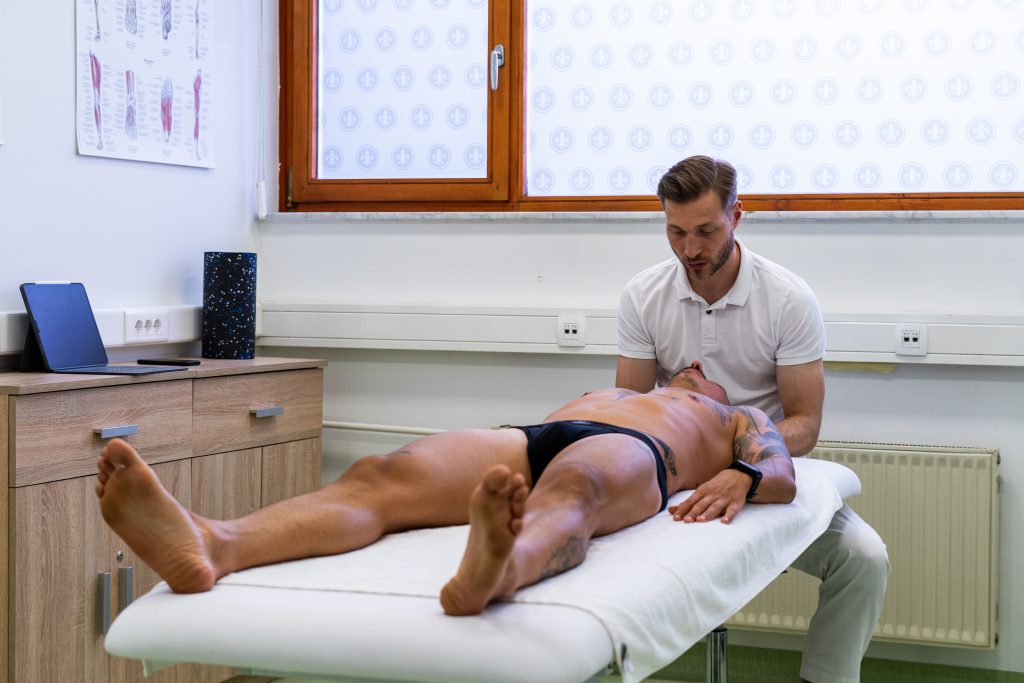
Person with functional organ problems
Physiotherapist performing physiotherapy
Spondylolisthesis: This is the forward slippage of one vertebra relative to another, which can cause pressure on the nerves and result in pain and movement difficulties.
Musculoskeletal disorders: Muscle tension, overexertion, poor posture and soft tissue injuries are common causes of back pain, especially with a sedentary lifestyle.
Facet syndrome: This occurs when the joints between the
vertebrae become overloaded, causing pain that can radiate to surrounding areas.
Entrapment of nerve structures, causing pain and tingling in the upper or lower limb.
Viscerosomatic influx: Back pain is not always related solely to musculo- skeletal issues. It can also stem from problems with internal organs, such as the digestive tract, kidneys, liver or lungs. These problems cause a viscerosomatic influx, where nerve impulses travel from the organs to the spine. For example, kidney problems often manifest as pain in the lumbar region, while heart or stomach problems manifest as pain in the thoracic spine.
Neck pain and problems

Holistic approach to treatment

As an osteopath and physiotherapist treating spinal issues, I use a holistic approach that focuses on treating the cause rather than just relieving symptoms.
This means I treat each patient individually, taking into account their
specific problems and condition.
Specialist Almedin Muharemović performing osteopathic and physiotherapy treatment, from a distance

A holistic approach includes:

– Reduction of inflammatory processes: This helps reduce pain intensity and speeds up tissue regeneration.

– Improvement of overall body function: Because the body's systems are interconnected, it is important to improve the function not only of the spine, but also of all supporting structures and internal organs that can affect the spine. In this way, better balance is achieved in the body.

– Restoration of body functionality: With appropriate exercises, we establish better functioning of the musculoskeletal system, which prevents further injuries and improves the body's readiness for daily or sports activities. Through a tailored approach and a focus on the causes of problems, we achieve long-term results that enable patients to live a quality life free of chronic pain.

Discover the power of the HMA method